Duy Vu
February 9, 2026
•
15 mins read

Most businesses do not operate on a single platform. A typical stack includes payment tools like Stripe, ecommerce platforms like Shopify, accounting systems such as QuickBooks, communication tools like Slack and Outlook, data warehouses like Snowflake or BigQuery, and sometimes very industry specific software such as hotel PMS systems like Oracle Opera. Because of this complexity, one of the first questions teams ask before adopting Retool is whether it can actually integrate with everything they already use.
Retool is built specifically for these kinds of real world environments. It does not depend on a fixed list of prebuilt integrations. Instead, it works directly with APIs, which means if a system exposes data through an API, Retool can connect to it. This makes Retool flexible enough for both modern SaaS products and older legacy systems.
Most integrations in Retool are done through REST APIs. A REST API is essentially a structured way for one system to request data from another or send data back. In Retool, you configure API endpoints, choose request methods like GET or POST, and define headers or authentication once. After that, the data can be reused across your entire app.
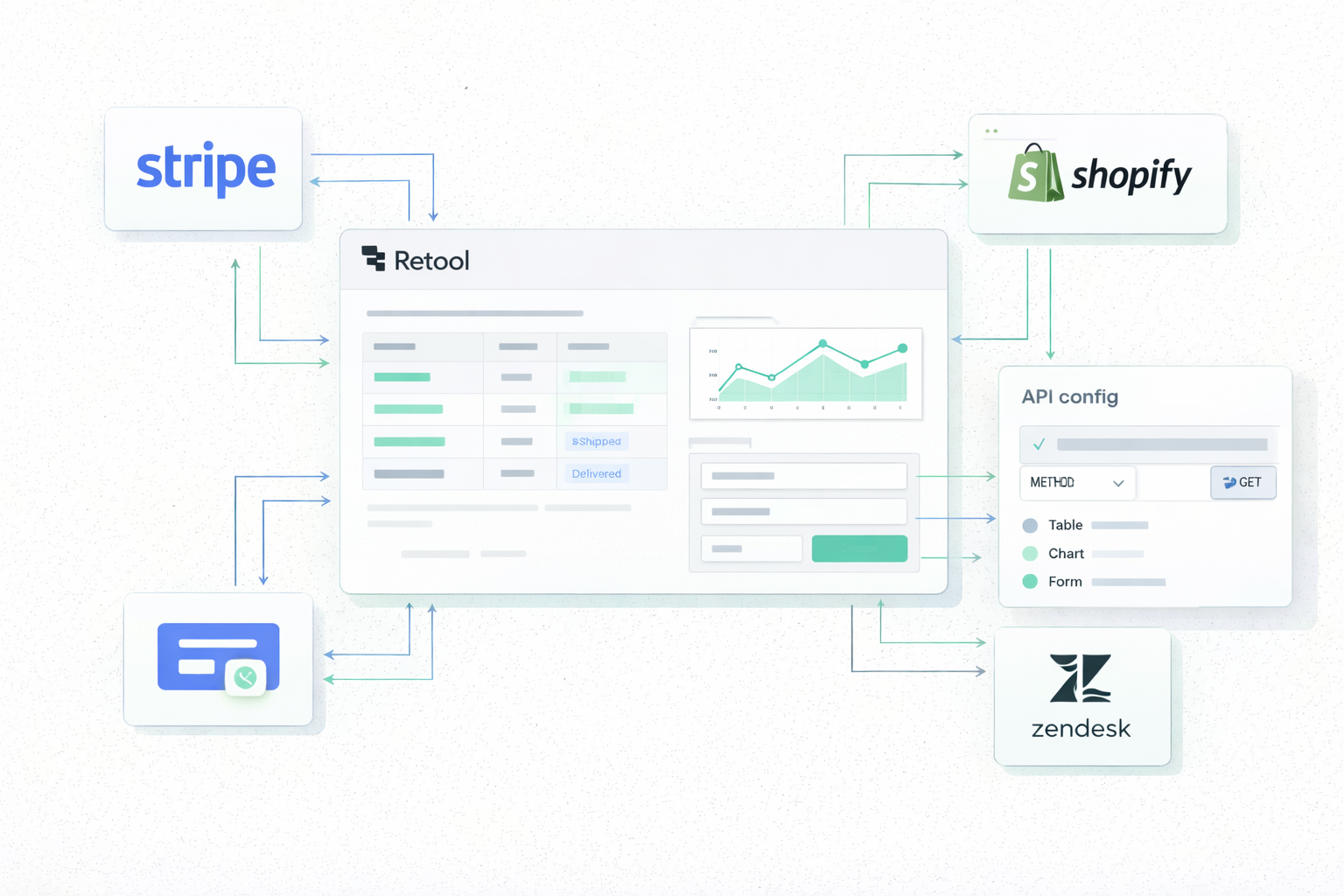
This approach makes it easy to pull live data from systems like Stripe, Shopify, Zoho, or Ticketmaster and instantly display it in tables, charts, or forms. More importantly, the data is not static. It updates in real time, which is critical for operational dashboards and internal tools that teams rely on daily.
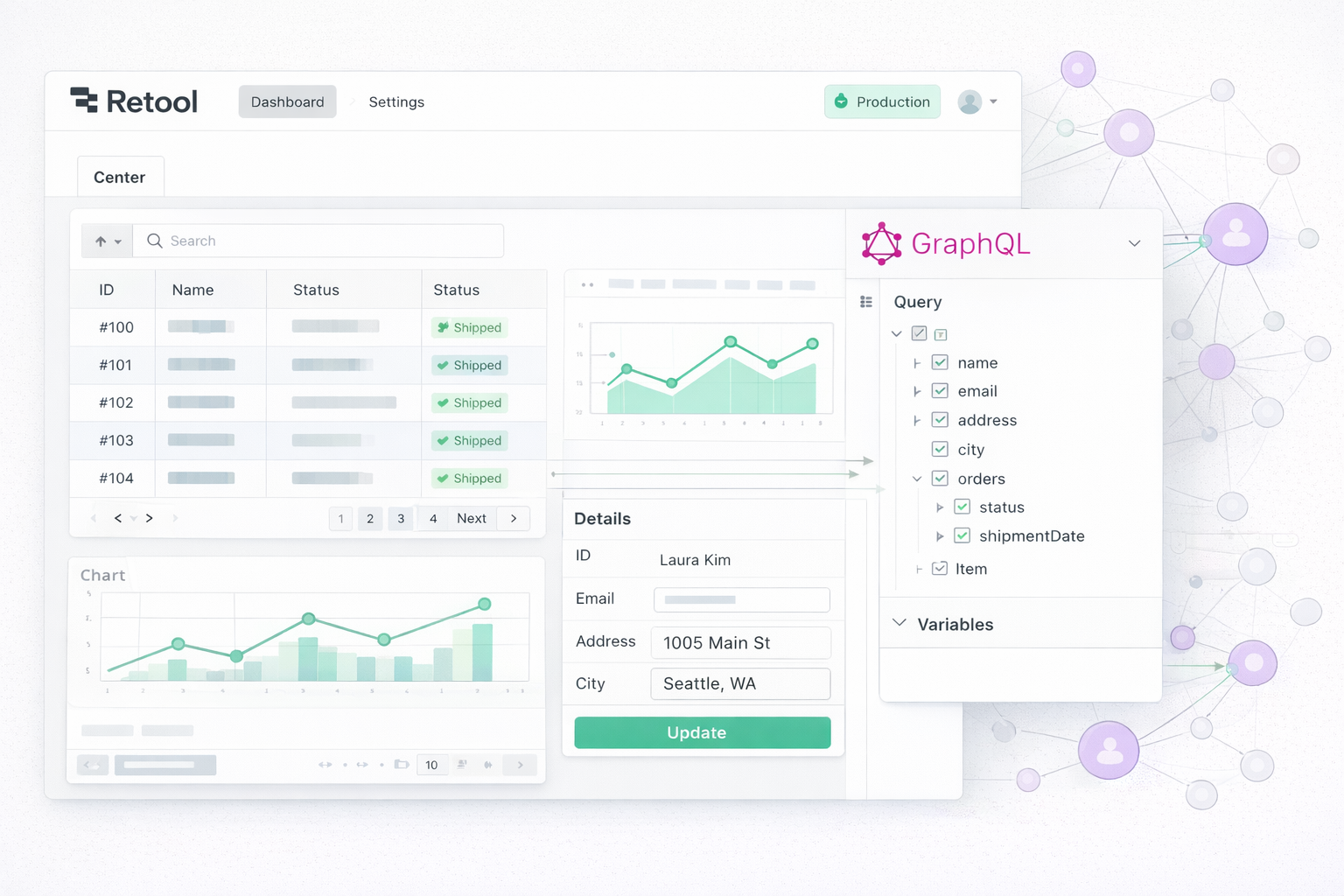
For platforms that support GraphQL, Retool offers native GraphQL integration. GraphQL allows teams to request only the data they actually need instead of fetching large datasets and filtering them later. This is especially useful when working with complex data models or performance sensitive applications.
Inside Retool, GraphQL queries can be configured visually while still giving developers full control over query structure and variables. This makes it easier to build efficient tools without adding extra backend layers or custom services.
In real business systems, data rarely comes in small amounts. Financial records, order histories, event logs, and analytics data can quickly grow into thousands or millions of rows. Retool handles pagination at the API level, allowing data to be fetched in chunks instead of all at once.
This means dashboards connected to Snowflake, BigQuery, or transactional systems remain fast and stable. Teams can scroll, filter, and search through large datasets without performance issues, even as the underlying data continues to grow.
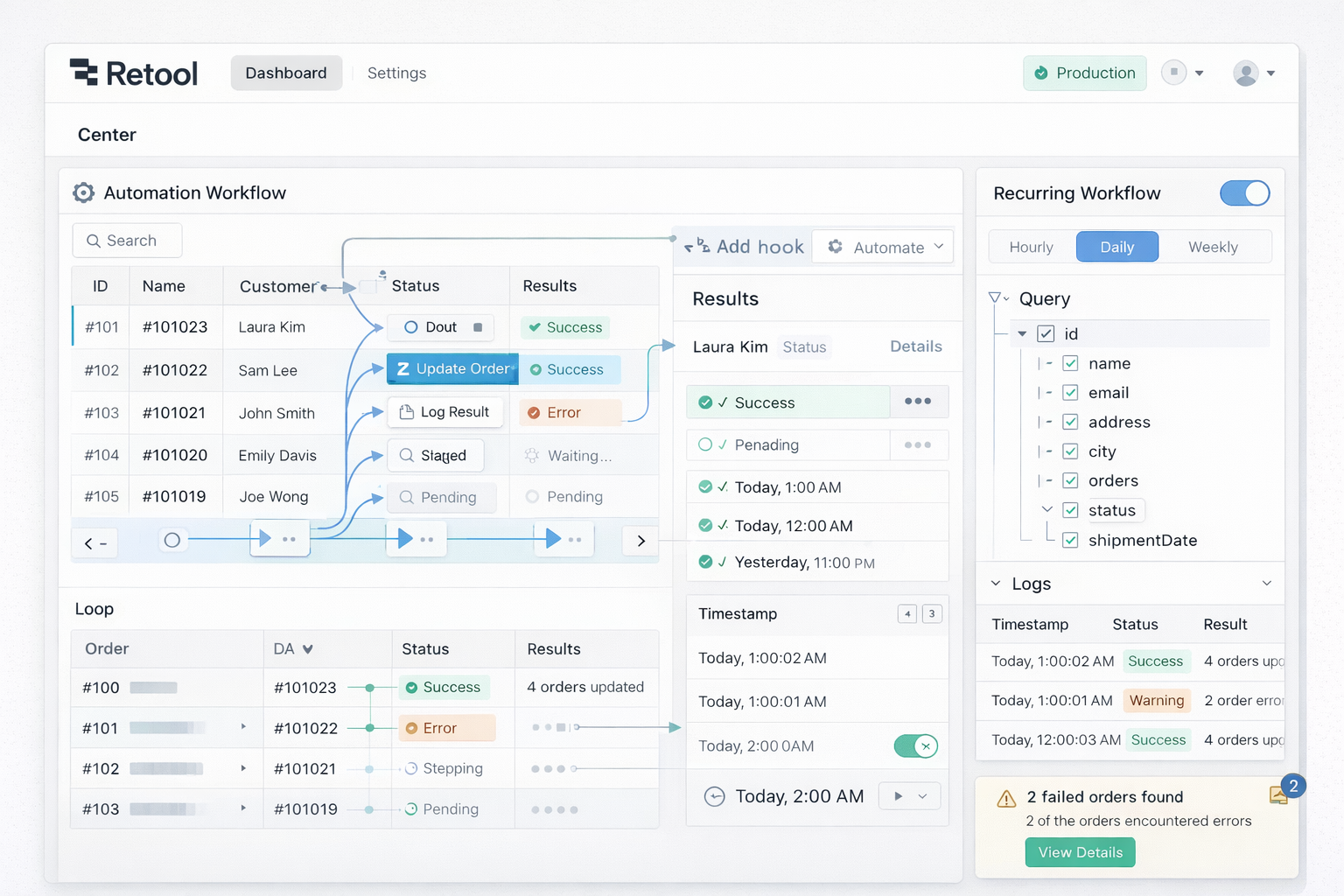
Retool is not limited to single API calls. It supports looping logic that allows you to run the same operation across multiple records or responses. For example, you can loop through a list of orders, update each one via an API, and log the results in another system.
Recurring workflows are also supported, which allows teams to schedule tasks such as syncing data every hour, checking system health daily, or triggering alerts when conditions are met. This turns Retool into a lightweight automation layer on top of your existing stack.
A major advantage of Retool is that it is not read only. It can both read data from systems and write data back. This means internal tools built in Retool can actively change the state of your business systems, not just observe them.
Operations teams can update Stripe subscriptions, finance teams can push adjustments to accounting systems, support teams can modify CRM records, and logistics teams can update inventory platforms like Katana. All of this happens with proper permissions and auditability, making Retool suitable for production use.
Many companies operate with a mix of modern APIs and older systems. Retool works well in both cases. As long as a system exposes an API, whether modern or legacy, Retool can connect to it. This is particularly valuable in industries like hospitality, manufacturing, and logistics where tools like Oracle Opera or custom internal systems are common.
Instead of rebuilding everything or forcing data into a new platform, teams can use Retool as a unifying layer that brings all systems together in one interface.
The real value of Retool is not just integration, but speed. Teams can build internal tools that connect multiple systems in days instead of months. There is no need to wait for custom backend development or maintain fragile scripts.
By acting as a flexible API driven layer, Retool allows companies to move faster, reduce manual work, and adapt their tools as their stack evolves. This is why it works so well for operations, finance, product, and engineering teams that need control without unnecessary complexity.
If your team is struggling to manage complex data sources or needs a professional release pipeline for your Retool apps, that’s exactly where we come in. At Retoolers, we don't just build apps; we build the infrastructure that keeps your business running. Get a Quote
Looking to supercharge your operations? We’re masters in Retool and experts at building internal tools, dashboards, admin panels, and portals that scale with your business. Let’s turn your ideas into powerful tools that drive real impact.
Curious how we’ve done it for others? Explore our Use Cases to see real-world examples, or check out Our Work to discover how we’ve helped teams like yours streamline operations and unlock growth.
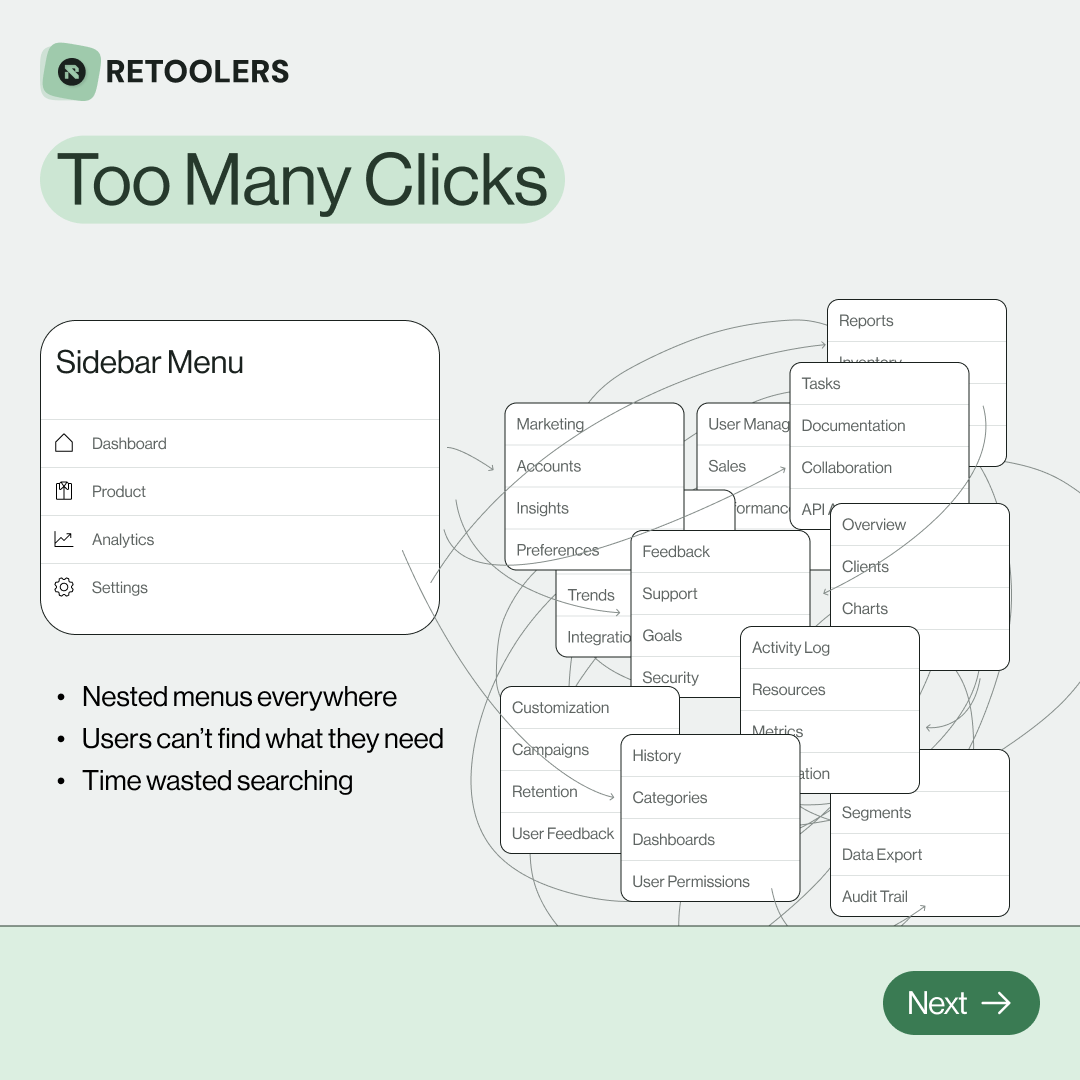
🔎 Internal tools often fail because of one simple thing: Navigation.
Too many clicks, buried menus, lost users.
We broke it down in this 4-slide carousel:
1️⃣ The problem (too many clicks)
2️⃣ The fix (clear navigation structure)
3️⃣ The Retool advantage (drag-and-drop layouts)
4️⃣ The impact (happier teams)
💡 With Retool, you can design internal tools that are easy to use, fast to build, and simple to maintain.
👉 Swipe through the carousel and see how better UX = better productivity.
📞 Ready to streamline your tools? Book a call with us at Retoolers.
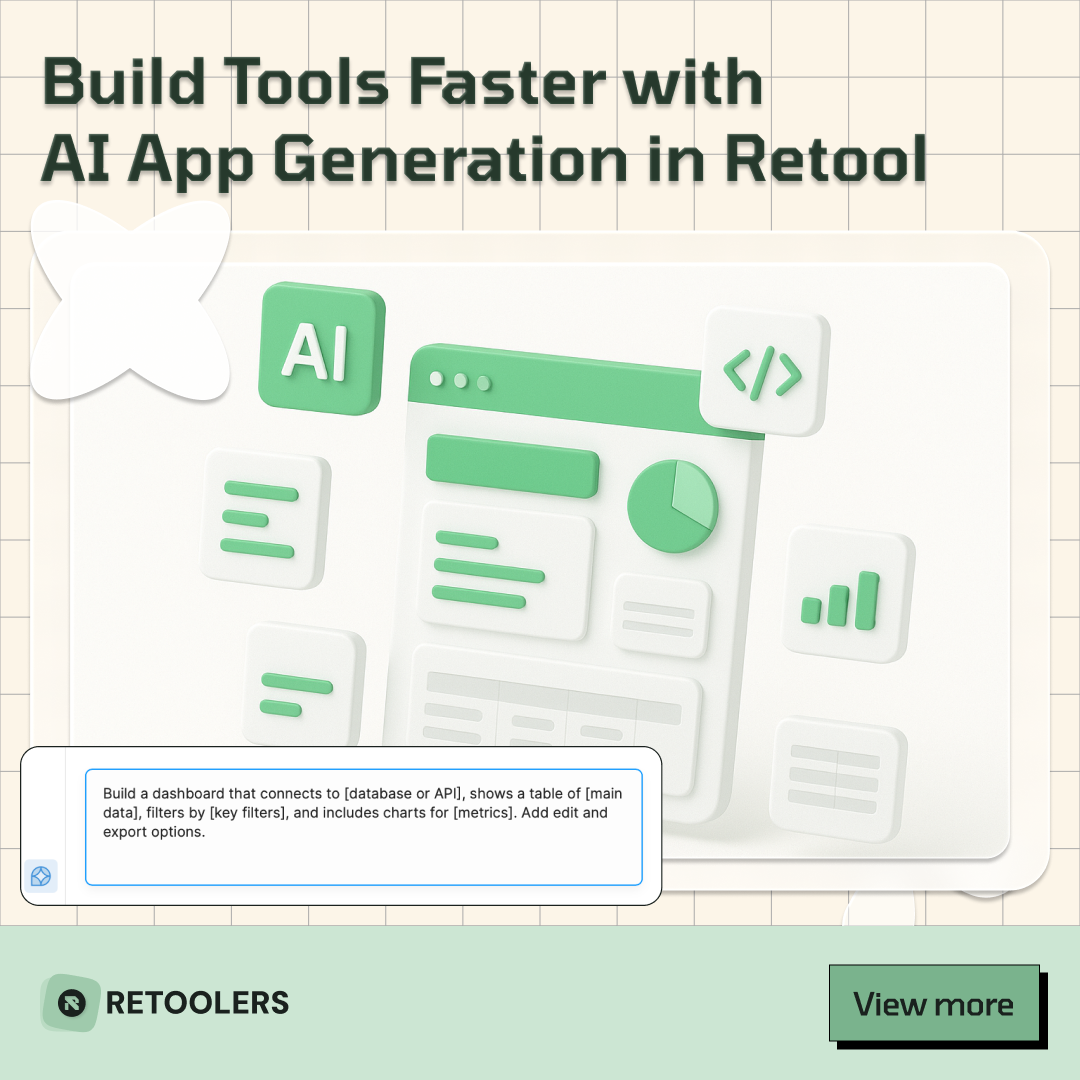
🚀From idea → app in minutesBuilding internal tools used to take weeks.
Now, with AI App Generation in Retool, you can describe what you want in plain English and let AI do the heavy lifting.
At Retoolers, we help teams move faster by combining AI + Retool to create tools that actually fit their workflows.
👉 Check out our blog for the full breakdown: https://lnkd.in/gMAiqy9F
Before we quote, we help you clarify the workflow. Share your idea, process, or existing tools, and we’ll map the key requirements, suggest the right system, and create a free wireframe so you can see the solution before development starts.