Duy Vu
February 8, 2026
•
10 mins read

Pricing a Retool development job sounds simple until you are actually doing it. Retool itself is fast. The hard part is deciding what to build, how polished it needs to be, and how long it will live inside your company.
That is why Retool pricing feels all over the place. One developer gives an hourly rate. Another pushes a monthly plan. Someone else says fixed price but changes scope halfway through. None of these feel safe when the tool is critical to your operations.
The truth is simple. Retool pricing only makes sense when you separate planning from building.
Pricing Retool development feels confusing for most teams because the effort is hard to see upfront. On the surface, a Retool app looks like a simple dashboard with tables, buttons, and filters. But once you start planning the actual behavior of the system, the complexity grows fast. Data often comes from multiple sources that were never designed to work together. Business rules live in spreadsheets, emails, or people’s heads. Permissions, approval flows, error handling, and performance all add layers that are not obvious in the first conversation.
Another reason pricing feels unclear is that Retool sits between no code tools and traditional software development. It is faster than building from scratch, but it still requires real engineering thinking. Many teams expect low cost because of the speed, then feel surprised when pricing reflects the true scope of logic and integration work. That gap between expectation and reality is what makes Retool pricing feel unpredictable.
A common mistake is pricing based on the number of screens or pages. This approach assumes that all screens require the same effort, which is rarely true. One admin screen with complex permissions, workflows, and data validation can take more time than several simple dashboards combined. Screen based pricing ignores what actually drives cost, which is logic and data complexity.
Another frequent mistake is jumping straight into hourly pricing without a defined scope. While this feels flexible, it often leads to frustration on both sides. Requirements change, hours increase, and budgets become hard to control. Stakeholders start to feel nervous because there is no clear finish line. Even when the product improves, the lack of predictability makes the experience stressful.
Some teams also assume Retool should always be cheap because it is a low code tool. This mindset often leads to underestimating planning, testing, and UX decisions. Retool speeds up building, not thinking. When teams skip proper planning to save money, they usually end up paying more later through rework and redesign.
Wireframing is the moment when Retool pricing stops being guesswork and becomes clear. By mapping out screens, data flows, roles, and edge cases, the real scope of the system becomes visible. What once felt like a vague idea turns into a concrete product with clear boundaries. This process often reveals hidden complexity, but it also removes unnecessary features that were never truly needed.

This is why wireframing sits at the center of our pricing approach. Offering it for free allows teams to explore their ideas without pressure. It creates shared understanding and prevents surprises later. Once wireframes exist, it becomes much easier to decide whether a project should be fixed price, monthly, or handled in a more flexible way.
Fixed price works best when the scope is stable and well defined. After wireframing, features and timelines are locked in, which allows the cost to stay predictable. This option is ideal for internal tools that need to be reliable and complete, such as admin panels, reporting systems, or operational dashboards. Teams know exactly what they are paying for and when the work will be delivered, which builds confidence and trust.
Monthly pricing is designed for teams whose tools evolve over time. If requirements change frequently or new features are added every few weeks, a monthly plan removes friction. Instead of renegotiating scope and cost, the team can focus on continuous improvement. This model feels similar to having an internal Retool team without the overhead of hiring and onboarding. It offers predictable spending with flexible output.
Pay as you go pricing is best used in specific situations. Small tasks, quick experiments, or short term support work can benefit from this model. However, for larger systems, it can become inefficient if used without clear scope. Without structure, costs can slowly grow without delivering a clear milestone. That is why it works best as a fallback option, not the default choice.
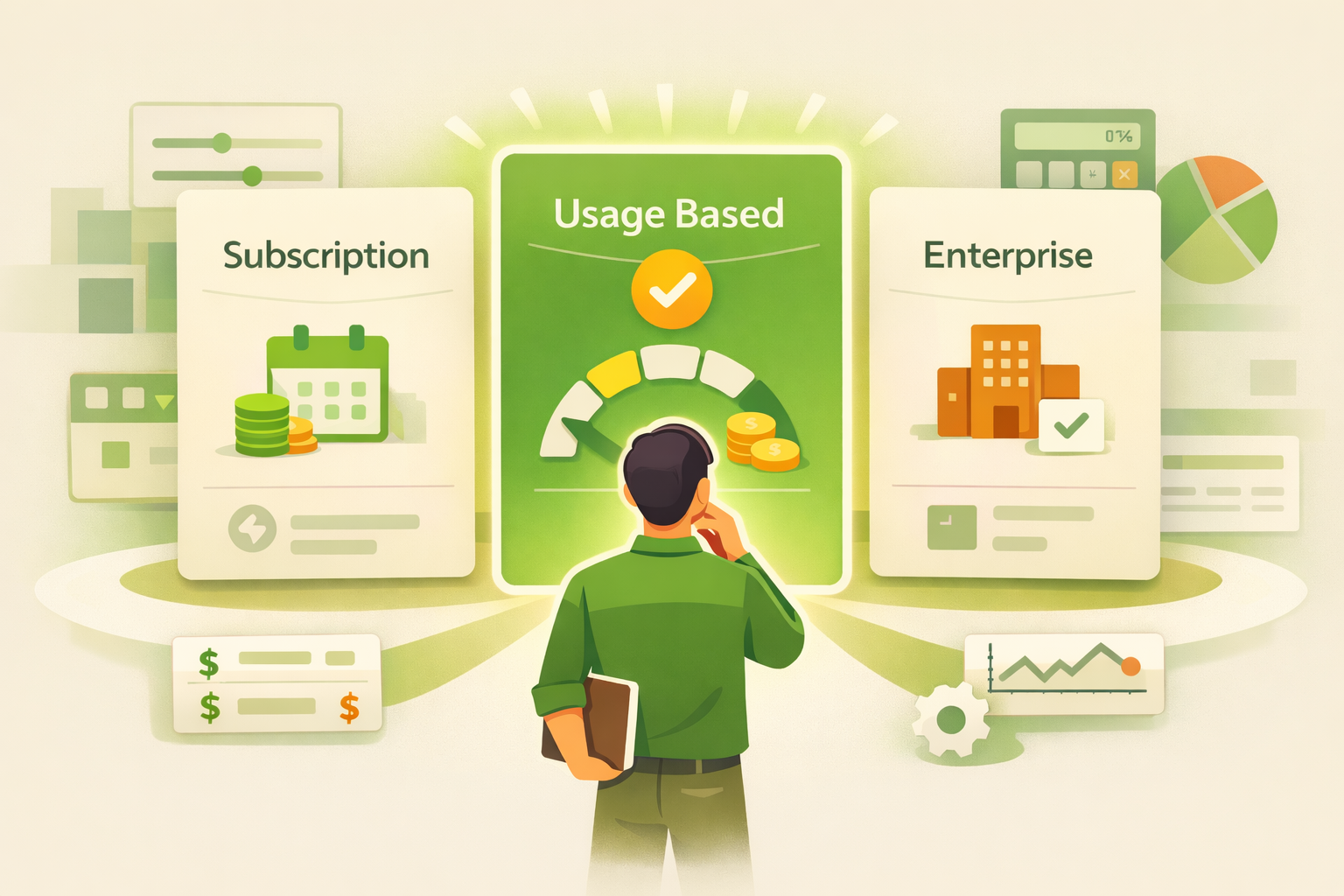
Choosing the right pricing model depends more on clarity than on budget. If you are still unsure what you need, starting with wireframing is the safest move. It reduces risk and helps you make informed decisions. If your requirements are clear and unlikely to change, fixed price gives you peace of mind. If your system will grow and change regularly, monthly pricing offers flexibility without chaos. Pay as you go should be reserved for cases where the work is truly small or undefined.
Retool pricing does not have to feel stressful or unpredictable. With the right structure, it becomes straightforward and transparent. Clear scope leads to clear cost, and clear cost leads to better decisions. If you want to understand what your Retool project really requires before committing, starting with free wireframing is the easiest way to move forward with confidence.
If you want clear scope, predictable pricing, and zero surprises, start with a free wireframing session. We will map your Retool app first, then give you a fixed price you can actually trust. Get a quote when you are ready. Get a Quote
Looking to supercharge your operations? We’re masters in Retool and experts at building internal tools, dashboards, admin panels, and portals that scale with your business. Let’s turn your ideas into powerful tools that drive real impact.
Curious how we’ve done it for others? Explore our Use Cases to see real-world examples, or check out Our Work to discover how we’ve helped teams like yours streamline operations and unlock growth.
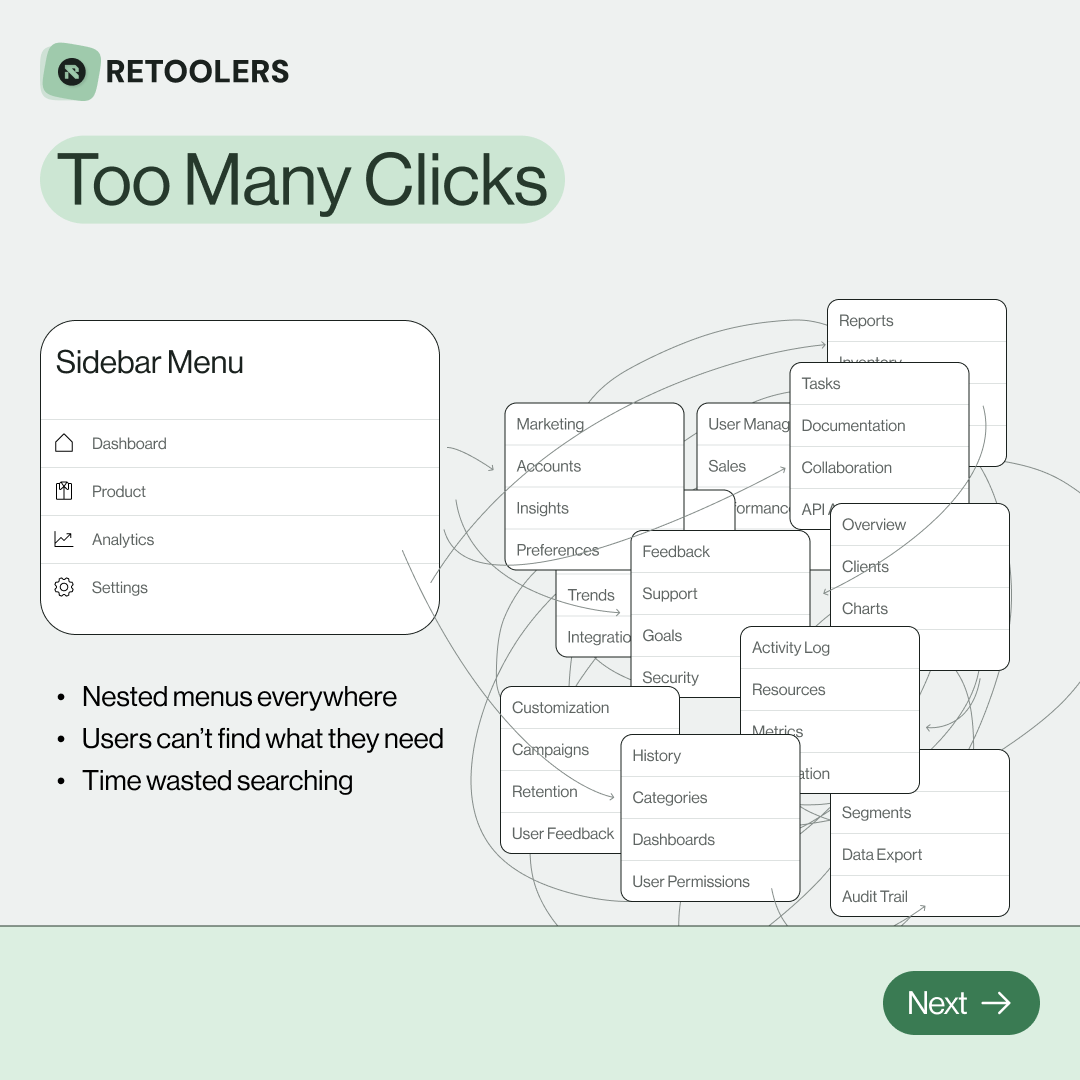
🔎 Internal tools often fail because of one simple thing: Navigation.
Too many clicks, buried menus, lost users.
We broke it down in this 4-slide carousel:
1️⃣ The problem (too many clicks)
2️⃣ The fix (clear navigation structure)
3️⃣ The Retool advantage (drag-and-drop layouts)
4️⃣ The impact (happier teams)
💡 With Retool, you can design internal tools that are easy to use, fast to build, and simple to maintain.
👉 Swipe through the carousel and see how better UX = better productivity.
📞 Ready to streamline your tools? Book a call with us at Retoolers.

🚀From idea → app in minutesBuilding internal tools used to take weeks.
Now, with AI App Generation in Retool, you can describe what you want in plain English and let AI do the heavy lifting.
At Retoolers, we help teams move faster by combining AI + Retool to create tools that actually fit their workflows.
👉 Check out our blog for the full breakdown: https://lnkd.in/gMAiqy9F
As part of our process, you’ll receive a FREE business analysis to assess your needs, followed by a FREE wireframe to visualize the solution. After that, we’ll provide you with the most accurate pricing and the best solution tailored to your business. Stay tuned—we’ll be in touch shortly!